Experiments and Experiences with Alternative Techniques and Adapted Building Methods
Background – Examples – Affects / Conclusion
Professor Doctor Norbert Pintsch
Architect, Civil, and Industrial Engineer
IPC, FBTC, FPAC, RUC
BACKGROUND
Various activities were undertaken in the Berlin period by the IPC (Charly, Johnny, etc.), which can be disregarded in the present consideration. A special project was the Power Box, a joint effort between Germany and Malaysia (see: www. ...).
With increasing international activity from 1990, which started in Pakistan and then continued into Cameroon, Colombia, etc., new challenges were encountered in the field of construction methods and technology.
EXAMPLES
In the TTTC of the AeFeA (NGO) in Pakistan, solar cookers, solar dryers, windmills (Savonius principle), hot water heaters, also a power box, for applications in rural areas and able to be locally produced, i.e. also without electricity and special tools, were made available and accessible not only to the villagers, but also to student visitors for educational purpose.
The objects were made in small quantities, distributed and sold and explained in lectures and workshops - from Adamkot in the south to Bahawalnagar to Abbottabad.
In the case of building methods, foremost the “women's center”, a competition for building samples was carried out, with a jury, awards and an exhibition. Not only experiences from excavations in the ancient city of Harappa by M. Kenoyer (three-layer wall construction used 5000 years ago, today referred to as passive solar architecture) were used, but also tests carried out in the wind tunnel of the TU Berlin before building, in order to ensure natural ventilation and air circulation cycles; The village and the planned development were modeled in accordance with the results of the study.
Different materials were used for the buildings (mud bricks, hollow bricks, solid wall and combinations with insulating material, also upside-down clay pots). The temperature was measured regularly at fixed points in order to use the experiences for later buildings (Lahore, D.I.K.). The experimental buildings in Lahore (PCC and BNU) were financed by the German Embassy and the IPC, the one for DIK (flood victims) by the Rotarians and with the help of the SES. The objects for the flood victims also considered results of developments in adapted technology. The building experiments in the BNU led to establishment of an Institute for Experimental Buildings (IEC, see www. ...).
The requirements for AT (alternative technology) and AB (adapted, climate-friendly construction) were different in Pakistan, Cameroon, Colombia, but similar in prevailing conditions (lack of tools, lack of electricity, etc.).
In Bamenda/Cameroon a permanent exhibition for AT and AB was created in the Center for Adapted Techniques (CAT, NGO), with workshops, lectures and presentations from Douala to Bafoussam to Maroua. A cooperation with the BUST led to the founding of the IAM; CAT's work has received several awards and it has been praised in press articles, the crown was thereby the establishment of RUC / Royal University Centre.
With the support of the then GTZ, as well as the IPC, also with the support of the SES, Misereor, etc., CAT-clubs were established in the districts of the former NW province; the Kids-Club in Bamenda conducted and still conducts environmental workshops, despite the turbulent situation in the English-speaking areas.
In Colombia, TM (ONG) Saboya was able to bring awareness about AT to the people in the town; Through cooperation with a workshop in Chiquinquira, equipment was manufactured for schools (to explain and raise awareness of the students about AT) and remote Fincas (independent of power supply) and introduced for use. A particular success was the branch in Leticia on the Amazon with the assistance of the National University in Bogota (including a course for environmental technology as a run-up to an exhibition in the Museum Leopoldo Rother with material from Germany ). IdEpeT, an institution for like-minded people, was established in project and partner locations. In Colombia, the project work was supported by IPC, DGFK, Misereor and SES.
EFFECTS
If one asks about the achievements of the activities outlined, then, according to spectacular reports in the media, they are visible in everyday life. Everyday life includes coping with the normal demands of life and dealing with other developments. People in rural areas in particular are subject to enormous information pressure from the cities. In order to appear open minded, ideas are being adopted which are usually not compatible with the environment. There is a certain tragedy in the subsequent realizations of the townsfolk, whose previous influence on the rural population had already had a negative impact on the environment. A certain traditional conservative attitude can be helpful here, but it will be difficult for the willing and affected to maintain it.
A remarkable example was the experience in a Pakistani village - one lived there, in today's sense very environmentally friendly, was economical with water and fuel! And all this without much dependence on the urban areas.
CONCLUSION
All in all one can say: Good ideas require the right point in time and a minority that lives what it considers right and environmentally friendly!
Labels: Berlin, Chiquinquira, Cultura e. V., DGFK e. V., FBTC, FPAC, IPC Cheyenne, Lahore, Nauen, Prof. Dr. Norbert Pintsch, SODSH, spaetcolombia, SPARC, Sparc Project, spathcameroon, SPOCA, SUTOL
Bamenda
posted by S A J Shirazi @ 10:31 AM,
,


Background – Examples – Affects / Conclusion
by
Prof Dr Norbert Pintsch, IPC, FPAC
BACKGROUND
Various activities were undertaken in the Berlin period by the IPC (Charly, Johnny, etc.), which can be disregarded in the present consideration. A special project was the Power Box, a joint effort between Germany and Malaysia (see: www. ...).
With increasing international activity from 1990, which started in Pakistan and then continued into Cameroon, Colombia, etc., new challenges were encountered in the field of construction methods and technology.
EXAMPLES
In the TTTC of the AeFeA (NGO) in Pakistan, solar cookers, solar dryers, windmills (Savonius principle), hot water heaters, also a power box, for applications in rural areas and able to be locally produced, i.e. also without electricity and special tools, were made available and accessible not only to the villagers, but also to student visitors for educational purpose.
The objects were made in small quantities, distributed and sold and explained in lectures and workshops - from Adamkot in the south to Bahawalnagar to Abbottabad.
In the case of building methods, foremost the “women's center”, a competition for building samples was carried out, with a jury, awards and an exhibition. Not only experiences from excavations in the ancient city of Harappa by M. Kenoyer (three-layer wall construction used 5000 years ago, today referred to as passive solar architecture) were used, but also tests carried out in the wind tunnel of the TU Berlin before building, in order to ensure natural ventilation and air circulation cycles; The village and the planned development were modeled in accordance with the results of the study.
Different materials were used for the buildings (mud bricks, hollow bricks, solid wall and combinations with insulating material, also upside-down clay pots). The temperature was measured regularly at fixed points in order to use the experiences for later buildings (Lahore, D.I.K.). The experimental buildings in Lahore (PCC and BNU) were financed by the German Embassy and the IPC, the one for DIK (flood victims) by the Rotarians and with the help of the SES. The objects for the flood victims also considered results of developments in adapted technology. The building experiments in the BNU led to establishment of an Institute for Experimental Buildings (IEC, see www. ...).
The requirements for AT (alternative technology) and AB (adapted, climate-friendly construction) were different in Pakistan, Cameroon, Colombia, but similar in prevailing conditions (lack of tools, lack of electricity, etc.).
In Bamenda/Cameroon a permanent exhibition for AT and AB was created in the Center for Adapted Techniques (CAT, NGO), with workshops, lectures and presentations from Douala to Bafoussam to Maroua. A cooperation with the BUST led to the founding of the IAM; CAT's work has received several awards and it has been praised in press articles, the crown was thereby the establishment of RUC / Royal University Centre.
With the support of the then GTZ, as well as the IPC, also with the support of the SES, Misereor, etc., CAT-clubs were established in the districts of the former NW province; the Kids-Club in Bamenda conducted and still conducts environmental workshops, despite the turbulent situation in the English-speaking areas.
In Colombia, TM (ONG) Saboya was able to bring awareness about AT to the people in the town; Through cooperation with a workshop in Chiquinquira, equipment was manufactured for schools (to explain and raise awareness of the students about AT) and remote Fincas (independent of power supply) and introduced for use. A particular success was the branch in Leticia on the Amazon with the assistance of the National University in Bogota (including a course for environmental technology as a run-up to an exhibition in the Museum Leopoldo Rother with material from Germany ). IdEpeT, an institution for like-minded people, was established in project and partner locations. In Colombia, the project work was supported by IPC, DGFK, Misereor and SES.
EFFECTS
If one asks about the achievements of the activities outlined, then, according to spectacular reports in the media, they are visible in everyday life. Everyday life includes coping with the normal demands of life and dealing with other developments. People in rural areas in particular are subject to enormous information pressure from the cities. In order to appear open minded, ideas are being adopted which are usually not compatible with the environment. There is a certain tragedy in the subsequent realizations of the townsfolk, whose previous influence on the rural population had already had a negative impact on the environment. A certain traditional conservative attitude can be helpful here, but it will be difficult for the willing and affected to maintain it.
A remarkable example was the experience in a Pakistani village - one lived there, in today's sense very environmentally friendly, was economical with water and fuel! And all this without much dependence on the urban areas.
CONCLUSION
All in all one can say: Good ideas require the right point in time and a minority that lives what it considers right and environmentally friendly!
Labels: Bamenda, Berlin, Chiquinquira, Cultura e V, DGFK e V, FBTC, FPAC, IPC Cheyenne, Lahore, Nauen, Prof Dr Pintsch, spaetcolombia, Sparc Project, spathcameroon
posted by S A J Shirazi @ 8:47 AM,
,
Prof Dr Norbert Pintsch, Sen Res Fellow FPAC Lahore, Think Tank IPC Wyoming ***
Communication (exchange and transfer of information) and information (dissemination of knowledge, also their interpretation) are essential for coexistence of people!
The matter is so complex that it is a miracle that genuine communication is possible at all!
Consider the communication in one language, then we know from our experience what potential of misunderstandings lurks there - and then the acoustic dimension: The sound makes the music!
If we then still remember that terms and meanings in one language are often not present or can have completely different meanings in another language, then communication is a miracle at all.
Thinking and language expression are conditioned through education and upbringing, - no one is liberated from it.
It also means clarifying individually our various prejudices.
A professional scribbler, say reporter, constantly dances on the tightrope, which as we know from the experience of life, is a process that can mean enduring disability, exclusion from everyday activities, and so on.
If one enjoys extreme liberty of decision making or authority, still; - nothing comes from nothing, the scribbler tries to report neutrally, but is not really independent from results of his work in the information market, as supplier of information and producer of information.
The scribbler has to think of his livelihood while reporting neutrally and still taking position on subjects - a magic piece.
Tolerance has to be trained, it is more than a challenge even for every single person. In Central Europe, Carl von Ossietzky (publisher of the Weltbuehne, Nobel Prize 1935) and Tucholsky (co-publisher of the Weltbuehne) experienced the "special" significance of writing in the thirties of the last century.
At that time, the distribution media were in comparison to the present times of rudimentary nature and the general public was involved only as a reader or listener.
In the technologically upgraded and digitized society of today, each one is a sender and at the same time receiver of information.
The processing possibilities here hide danger of falsification of facts with a wide distribution in real time. This can for some be pleasing in political and social processes but actually hides unimaginable potential for disruption for most.
Some aspects have been outlined and show the difficulties of being active in this area, to act diligently between responsibility and dependence, to function in information circles and communication forces and try not to perish, - an almost inhuman task that at the same time makes it clear how important are training challenges before an Institute of journalism.
***
50 Jahre Pakistan des DPF,
60 Jahre Pakistan des DPF,
50 Jahre Deutsch-Pakistanisches Forum,
Herausgeber: Indus-River (Pakistan), Sanaga rive (Kamerun), Rio Magdalena (Kolumbien), Hekla, u.a.
Blogs: DGFK, SPARC, SPAET, SPOCA, SPATH, SEMOL, SUTOL
Labels: DGFK, Dr. Norbert Pintsch, FBTC, FPAC, IPC
posted by S A J Shirazi @ 8:47 AM,
,
By Norbert Pintsch, IPC, FPAC
The idea of cooperating with others, i.e. to exchange ideas with others and to stimulate each other, this thought is not exactly new!
In the United States of America (USA), company representatives came together and established privately funded socalled Think Tanks!
In the 20th century, this idea was implemented under president Franklin Roosevelt and a new form of advice emerged.
In politics, technological and economic interests are transferred into governance process in a lobby-like manner.
Such examples are presently implemented in many countries for selfish interests and they influence politics, usually with a certain lobby in the background.
The DGFK is an altruistic example of an informal Think Tank in which SUTOL, SEMOL, SPARC, SPATH, SPAET, SPOCA, but also FPAC and FBTC exist; however they operate in a subtle and discreet manner!
An interesting project is the so called Closed System, which outlines possibilities and tendencies, also of an uncomfortable kind, which is characterized by financial independence and the personal refrain from self-projection by the co-thinkers.
Labels: CULTURA, DGFK, FBTC, FPAC, IPC, Prof Dr Norbert Pintsch, SEMOL, SPAET, SPARC, SPATH, SPOCA, SUTOL
posted by S A J Shirazi @ 4:44 PM,
,
Prof Aamir Rafique handing over the IJC 2017 award to the president of the FPAC, Mr S A J Shirazi in a simple but impressive ceremony.
Labels: FPAC, IJC 2017
posted by S A J Shirazi @ 9:16 AM,
,
FPAC
Saturday, December 2, 2017
Dr Norbert Pintsch with S A J Shirazi
Labels: Dr. Norbert Pintsch, FPAC, S A J Shirazi
posted by S A J Shirazi @ 10:37 AM,
,
Through the Senior Research Fellow Prof Dr Norbert Pintsch further international contacts for the students working in the Moratuwa-University / Colombo and the BRAC University are able to be established.
Labels: FPAC, Prof Dr Pintsch/BRAC-University, Prof Dr Pintsch/Moratuwa-University
posted by S A J Shirazi @ 12:37 PM,
,
Think tanks are not a new discovery. The first think tank (TT) in the new times was established under president Theodore Roosevelt. People say, he must have been very successful, because nobody knew how little knowledge was at the back of his success. In spite of that, the thought and the pressure to TTs, has flourished.
In earlier times analogue sort of TTs were present, so one could absolutely call the arrangements at the court and palaces of Carl the Great under the scholar Alkuin as such TTs. We know in hindsight, how effectively they worked and had positive effects in the Carolingian kingdom.
As we strive as far as possible for a Both-and situation instead of an Either-Or situation, we would like to describe a structure, mostly virtual in nature and independent of personal influences of all types, because here we do not work with well defined work places and budgets.
At the lowest level, we have actively engaged NGOs in different countries, for example AFA, from which valuable experiences can be collected. (z.B. AFA).
Many NGOs have developed deep rooted structures, which deal with a product or a group of people (for example WAC)
At another level new societies were formed, which understood themselves as supporting institutions working in the cultural arena (for example SPARC).
A deeper version, specially connecting to academic institutions with their theoretical potential, led to so called -independent institutes-, in which practical work and theoretical research takes place (for example IEC).
These institutes make use of their contacts and cooperate with universities to and make it possible for students to involve themselves practically with the projects of the NGO (for example FPAC).
The drawing shows the virtual, intangible character of the model, which -if we are able to show the various inter-dependencies in it- reminds rather of a ball of wool, which is not easy to see through and if cut in the middle, it is useless. Seen as a closed system as a whole, creativity and innovation are already an integral part of it because the model is adjusted to the nature and its diversity as compared to a central authority which is unaware of the world outside.
PAK2014.10
Labels: FPAC, Prof Dr Norbert Pintsch, Thinks Tanks
posted by S A J Shirazi @ 9:31 AM,
,
One of the most cherished Spring activity in the village Thatta Ghulamka Dhiroka is annual housing competition. This is an open competition and everyone in the village participates. Judges select the best mud house, best details and best exterior and cash prizes are given.
This annual competition keeps the Dolls Village spanking round the year in addition to keeping the cultural morals alive. This year Winner Bibi Bashiran was the winner once again. Professor Aamir Rafique gave the cash prize.
Compitition with aims of preservation of rural cultural, heritage and environment protection was supported by FPAC and SPARC in Lahore through students from Punjab University.
The students were so impressed, that they have collected additional money for the winners.
Labels: Culture, Environment Protection, FPAC, Heritage, Prof Dr Norbert Pintsch, SES, SPARC, Thatta Kedona
posted by S A J Shirazi @ 1:08 PM,
,
Punjab village Thatta Ghulamka Dheroka has history. And its history really started when SES volunteer Dr Senta Siller and Prof Dr Norbert Pintsch first visited this village some 25 years ago.
Thanks to SES volunteers, two government schools (one for girls and the other for boys have progressed visibly. Where else young scholars like
Stephanie Walter or
Sophie Kuppler come and teach English, where else teachers from government schools are trained by the NGOs (AFA), where else annual sports days are celebrated?
Education is very close to the heart of Farooq Ahmad (Director Men Centre of AFA) and Farana (Director Women Art Centre of AFA). One unique tradition of the NGO is to distribute books, school copies and other educational material among students right in the start of academic year.
On Friday, March 25, 2015, stage was set
book distribution to students of two government schools. This year the support came from FPAC and SPARC-project in Lahore and through students from Punjab University.
Students of both schools look forward to this event and come in their best dresses for the occasion.
Labels: AFA, Distribution of Books, Education, FPAC, Prof Dr Norbert Pintsch, SES, SPARC, Thatta Kedona
posted by S A J Shirazi @ 9:18 PM,
,
Green Mag
Thursday, November 20, 2014
Download Green Mag Zero (pdf) by Prof. Dr. Norbert Pintsch here
Read more »Labels: FPAC, Prof. Dr.Norbert Pintsch, Publications
posted by S A J Shirazi @ 12:00 AM,
,
We always believe in reaching out and collaboration with academia and organization working in the fields of arts, science and technologies. And that how new ideas are generated and tested. Following two posters display some of our activities to achieve our objectives:
Read more »Labels: DGFK, FBWT, FPAC
posted by S A J Shirazi @ 9:27 AM,
,
Thatta Ghulamka Dheroka, commonly called
Dolls Village, has special attraction for all those who are interested in architecture and those who are interested in traditional housing. Thanks to the long standing experiences of the TTTC with simple technology and mud housing, combined with the cooperation with SPARC in Lahore that the common perception about local and environment friendly materials has undergone a fundamental change. Through the initiative IEC@BNU and through the
FPAC Foundation, which publishes the quarterly magazine GREEN MAG, for the first time architecture students and professors have visited the project intentionally in order to acquaint themselves with the traditional mud architecture and how it exists in Thatta Ghulamka Dheroka. On their way to the village, between Lahore and Okara, the group also visited a Bio-Gas-Installation facility. Here are some images of the trip.
Labels: Dr. Norbert Pintsch, FPAC, GREEN MAG
posted by S A J Shirazi @ 3:53 PM,
,
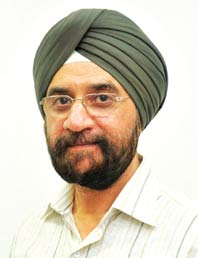
Damanbir Singh Jaspal, Principal Secretary (with a rank of Chief Secretary), waits in his room for some towels that he has sent for. He is dressed in a modest light green shirt, with a plain green turban wrapped on his head. His beard is neatly tucked away, and with the serious looking spectacles on his nose, he can be easily mistaken for a visiting professor staying at the Punjab University Executive Club. The only thing that glints in his appearance is his gold watch, loud but sleek but his sophisticated and well kept appearance is only incongruous with his haphazard surroundings.
Most odd for anyone is the large plant that has taken up almost one corner of the room, right between the striped brown sofas, and Jaspal’s suitcase, which lies yawning open, so that this plant can be cut into the right size, wrapped in a wet towel, and transported along with him to the Wagah Border and subsequently to Chandigarh, India. In fact one cannot miss this plant, as its leafy scent pervades the room just upon entrance.
“This is a beri tree-cutting that someone kindly brought to me from Sialkot last night,” says Jaspal. “I thought I wouldn’t be able to get this but coincidently I did. Now once I get back, I’ll see that it gets put into the root trainers as soon as possible so we can clone it later.” Even though Jaspal says the Quran too has mentioned a herb or two, where it upholds trees as part of nature, Sikhism is perhaps the only religion that actively endorses the protection of trees, relating to them spiritual evolution, and preserving within them heritage, environment, beauty, majesty and history all in one.
These trees are those under which the Sikh gurus have rested and sought shelter under, while their scriptures and legends mention forests where the military often passed from during wars. “Gurus often took rest under these trees and met with others under their leafy shade,” informs Jaspal. “As a result Sikh followers have erected gurdwaras in respect of these trees, such as the Ambh Sahib and the Beri Sahib. But the sad part is that many of these trees have died or have been suffocated thanks to several other reasons.”
“Air is the guru, Water is the father and Earth is the great mother,” reads a line from the Sikh scripture Guru Granth Sahib. It declares that the purpose of human beings is to achieve a blissful state and to be in harmony with nature. Furthermore the Gurus inferred that it is not the girth, size, or beautiful flowers that determine the significance of a tree but its usefulness that makes it important.
The trees that have sanctity in Sikhism include Bohr (Ficus Bengalensis), Pipli (Ficus Religiosa), Jand (Prosopis Spicigera), Garna (Capparis Horrida), Karir (Capparis Aaaphylla), Phalahi (Acacia modeta), Reru (Mimasa Leucophloea), Luhura (Cordia latifolia), Tahli (Shisham), Imli (Tamarind), Amb (Mangifera Indica), Harian Velan, Neem (Margassa), Ritha (Sapindus Mukorosa), Kalp (Mitragina Parvifolia) and Ber (Zizyphus Jujube).
Four of the most sacred trees associated with the Sikh shrines, namely Beri of Dukh Bhanjani, Beri of Sri Harmandir Sahib, Beri of Baba Budha (also of Sri Harmandir Sahib), Beri of Gurdwara Ber Sahib of Sultanpur Lodhi and Beri of Lachi Ber of Sri Harmandir Sahib highlight the role that trees have played in Sikh history. But this is not the only reason that led Jaspal to literally create a museum of trees. The first sparks of his interest in trees started when he was Minister of Forests. “I had a thought; a kind of realization that many of our gurdwaras are named after trees.

The Imli Sahib, the Ambh Sahib, and the Taali Sahib in Lahore; and these are sacred trees. But no one gave a thought to why these trees were connected to the shrines. So I began my research work, and I found out that at least 59 shrines were named after about 19 trees, and some of these trees don’t even exist any longer, while some of these shrines are untraceable.” Japsal for one means the Gurdwara Taahli Sahib, which he knew was located somewhere in Lahore, but since the tree was gone, no one knew any more where the shrine was. Still he stresses that his interest in the preservation of trees is ‘secular’.
“Religion may have a link with this interest of mine, but trees are important, trees must be preserved. Most of the people who have bought my book online are non-Sikhs, and none of my tree exhibitions have ever been held at Gurdwaras,” he claims. But at the same time, in paving Gurdwaras with marble, many of these ancient trees have been felled and an important part of Sikh heritage has been destroyed. The mango tree at Mohali’s shrine Ambh Sahib is now nothing but a stump.
THE MUSEUM: In order to scientifically preserve and propagate sacred trees and herbs which have social, religious, and cultural significance, the Chandigarh Nature and Health Society, a registered non-profit-organisation, has helped Jaspal in establishing the museum in Chandigarh, with support from the Ministry of Culture, Government of India, and the Botanical Survey of India.
The Museum of Trees has a large collection of trees, and its saplings, some nailed to the wall at eye level, accompanied by text that explains their background, benefits and history. Others are reproduced in multimedia form, especially those that have died. There are living historical trees, dead historical trees (represented in images) sacred trees and sacred herbs. There are healing and medicinal herbs and now Jaspal is beginning to work on kitchen herbs too. Most are not allowed to be touched while others such as the ‘chooi mooi’ or the morning glory, must be touched in order to see its characteristics.
The museum tells the story - the myths, customs, traditions and historical events - behind every tree that is planted outdoors or exhibited indoors. In the case of the Beri tree that Jaspal is taking with him, DNA from this plant extract could result in a cloned tree, so that the tree in Pakistan could be preserved in exactly the same form, and can also be represented in India. Complicated as it may sound, it is in fact not, and is the most intriguing new concept anyone has ever thought of.
For saplings or tree cuttings, Jaspal says he puts them first in roots trainers which are small plastic containers fertilized by a natural fertiliser from Kerala called Vermiculite. “After that we put it in the Mist Chamber, and rooting expectantly occurs after 2 months,” he explains. “Then we take it in the net house and place it there for two or three months.” Meanwhile, the towels have come and Jaspal has wrapped his beri tree cuttings in the damp towel. The leaves are already withered.
He hopes that by discovering more of these ancient trees, and not just those related to Sikhism, but also others in other parts of the world, he can help preserve them, so that one day, no tree can ever be extinct. Japsal’s love for trees more as a part of culture and heritage rather than any other reasons should be infectious everywhere in South Asia. In order to create a healthy community, to conduct research, and academic studies and to conserve history and environment tree preservation must become more common.
Labels: FPAC
posted by S A J Shirazi @ 8:17 PM,
,
Aamir Rafique from
Thatta Kedona (and the Secretary Foundation for Promotion of Academic Collaboration) met Chief Minister Punjab Shahbaz Sharif and presented him Thatta Kedona dolls. Here are some of the pictures of the occasion.
Labels: FPAC, Thatta Kedona
posted by S A J Shirazi @ 10:38 AM,
,


 The Imli Sahib, the Ambh Sahib, and the Taali Sahib in Lahore; and these are sacred trees. But no one gave a thought to why these trees were connected to the shrines. So I began my research work, and I found out that at least 59 shrines were named after about 19 trees, and some of these trees don’t even exist any longer, while some of these shrines are untraceable.” Japsal for one means the Gurdwara Taahli Sahib, which he knew was located somewhere in Lahore, but since the tree was gone, no one knew any more where the shrine was. Still he stresses that his interest in the preservation of trees is ‘secular’.


